CN: 21-944
Species: Wild Mammal, Muskox
Specimen:
Head
Shown:
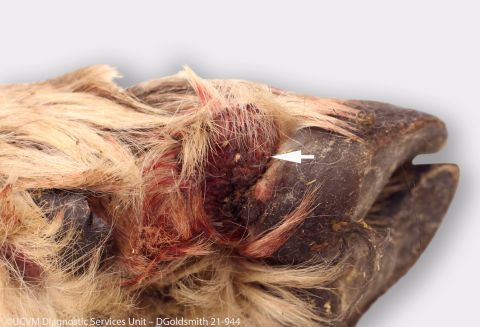
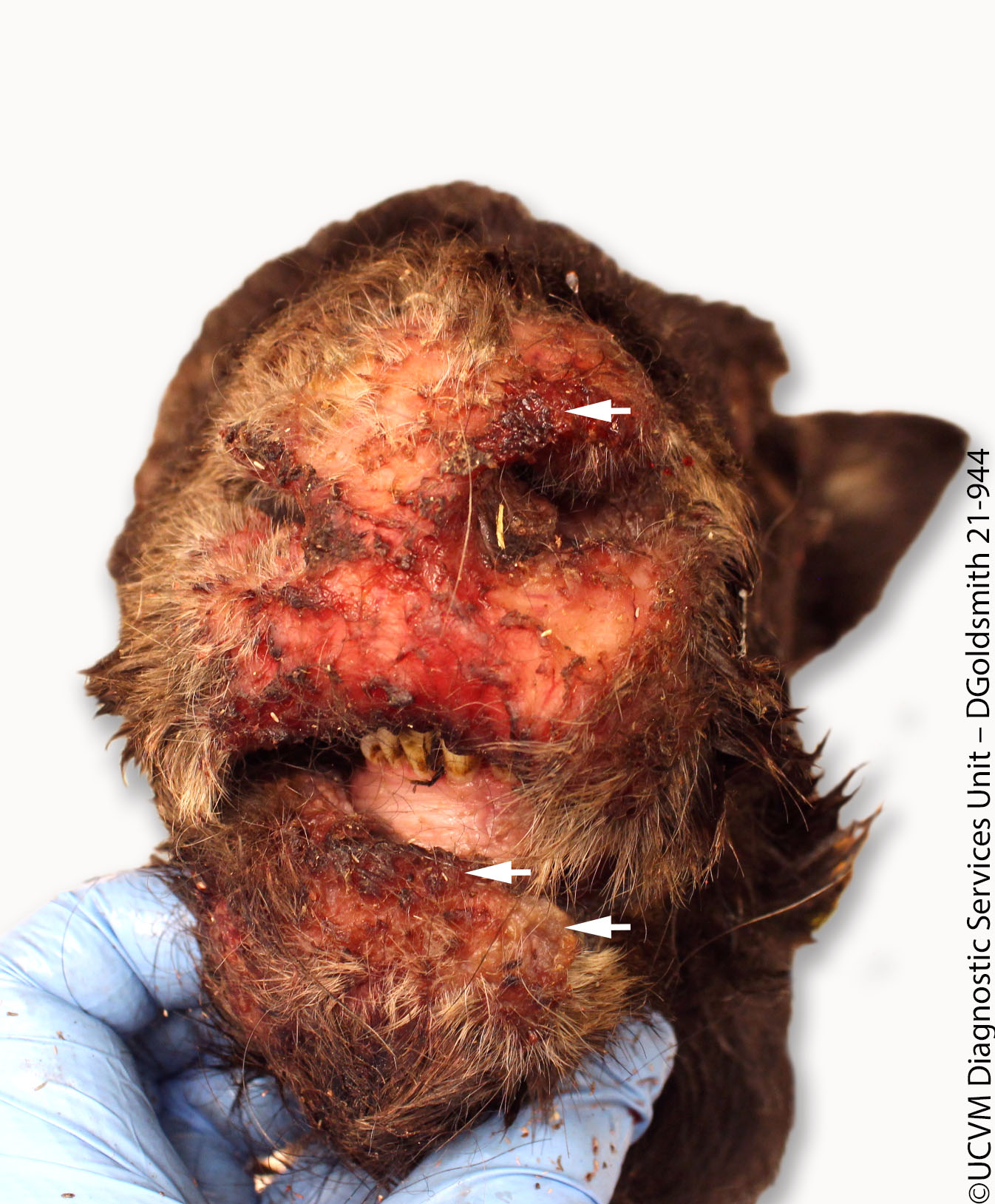
Proliferative and necrotizing dermatitis caused by Orf virus
Plain-Language Description:
Muzzle of a muskox calf with large areas of skin on the nose and lips very irritated and raw. This was caused by the viral disease contagious echthyma (also known as "orf") and would have been painful, likely making eating difficult and leading to weakness.
Pathology Description:
Muzzle with proliferative lesions across the nose and lips. The freeze-thaw process of the specimen has lead to sloughing of some of the proliferative lesions, leading some areas to appear ulcerated on these images.
Pathology:
Contagious Echthyma
General Information:
In the Arctic, contagious echthyma (also known as “Orf”) is a disease found in muskoxen, Dall’s sheep, mountain goats and possibly in moose, wapiti (elk), and caribou. It is caused by a virus and spread by direct contact between animals. Infected animals will have scabs or pus-filled blisters on the lips, mouth, nose, around the eyes and ears, and sometimes on the udder or around the tops of the hooves. These scabs are painful and may make it difficult for the animal to eat and walk, leading them to become weak. In rare cases, these skin infections can lead to deeper, whole-body bacterial infections and death. Contagious echthyma is most common in younger animals. The virus is zoonotic, meaning it can transmit between animals and people.
Pathology:
Contagious Echthyma
General Information:
In the Arctic, contagious echthyma (also known as “Orf”) is a disease found in muskoxen, Dall’s sheep, mountain goats and possibly in moose, wapiti (elk), and caribou. It is caused by a virus and spread by direct contact between animals. Infected animals will have scabs or pus-filled blisters on the lips, mouth, nose, around the eyes and ears, and sometimes on the udder or around the tops of the hooves. These scabs are painful and may make it difficult for the animal to eat and walk, leading them to become weak. In rare cases, these skin infections can lead to deeper, whole-body bacterial infections and death. Contagious echthyma is most common in younger animals. The virus is zoonotic, meaning it can transmit between animals and people.