CN: 23-2755
Species: Wild Mammal, Muskox
Specimen:
Kidney
Shown:
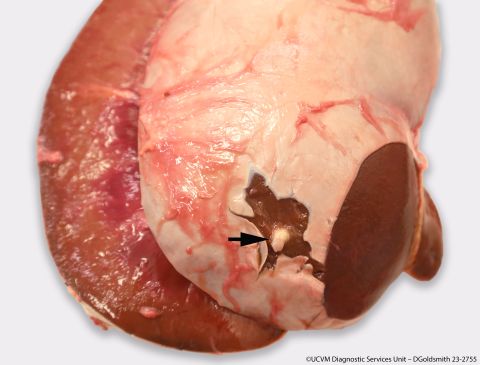
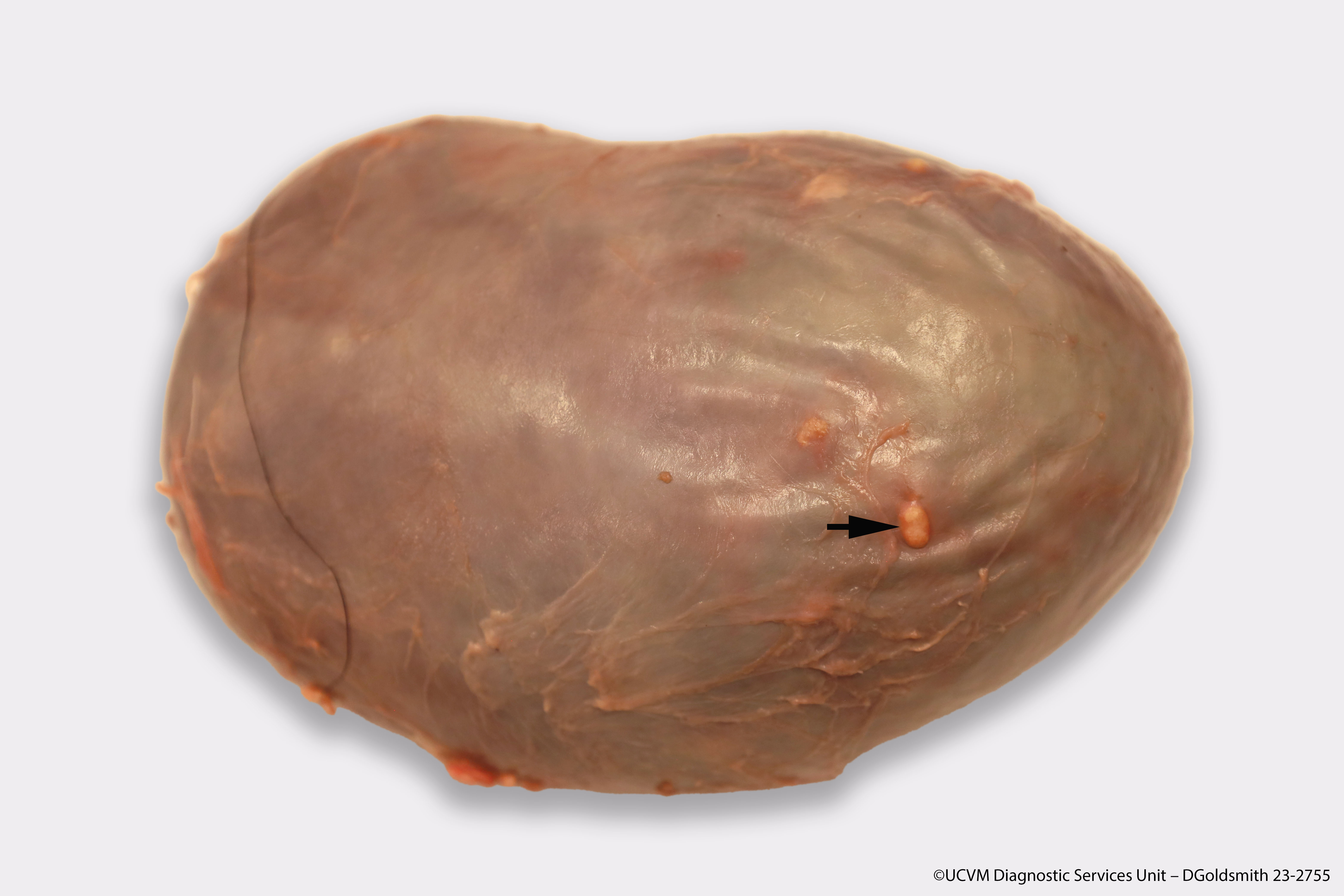
Chronic granulomatous nephritis with fibrosis and dystrophic mineralization caused by Brucella suis biovar 4
Plain-Language Description:
The kidney appears to have a thickened covering layer ("capsule"), which indicates that a long-term disease damaged it. There are also multiple white spots, caused by the Brucella infection
Pathology Description:
The outside of the kidney has a thickened capsule and 5-10 hard, linear white nodules that range from 0.5-1cm in maximum dimension with a granular/caseous texture.
Pathology:
Brucellosis
General Information:
In the Arctic, brucellosis is a highly contagious disease that occurs in caribou and muskoxen, and rarely in other species (e.g., moose). It is caused by the bacterium Brucella suis biovar 4 and most often affects the reproductive organs and leg joints. Infected animals may appear healthy, but often they will have swollen joints and may limp. Other signs of brucellosis are swollen, bigger-than-usual testicles, udder, or uterus. Affected animals may also have yellow-white spots or lumps (small abscesses) in their muscle tissue, kidneys, or other organs. Brucella is a zoonotic bacterium, meaning it can be transmitted between animals and people.
Pathology:
Brucellosis
General Information:
In the Arctic, brucellosis is a highly contagious disease that occurs in caribou and muskoxen, and rarely in other species (e.g., moose). It is caused by the bacterium Brucella suis biovar 4 and most often affects the reproductive organs and leg joints. Infected animals may appear healthy, but often they will have swollen joints and may limp. Other signs of brucellosis are swollen, bigger-than-usual testicles, udder, or uterus. Affected animals may also have yellow-white spots or lumps (small abscesses) in their muscle tissue, kidneys, or other organs. Brucella is a zoonotic bacterium, meaning it can be transmitted between animals and people.