CN: 19-454
Species: Wild Mammal, Caribou
Specimen:
Carpus
Shown:
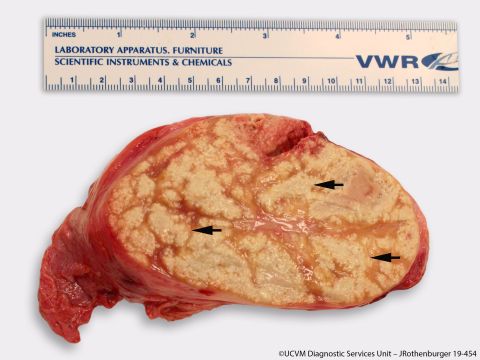
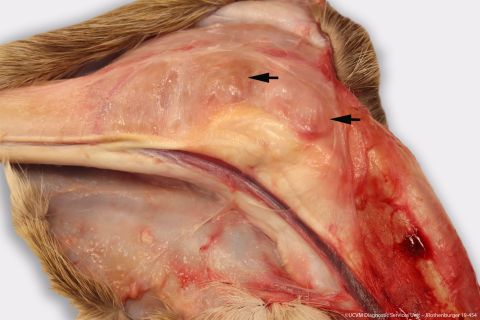
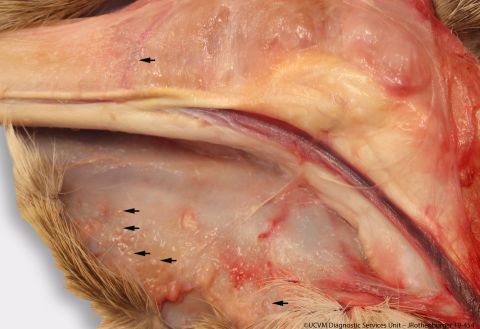
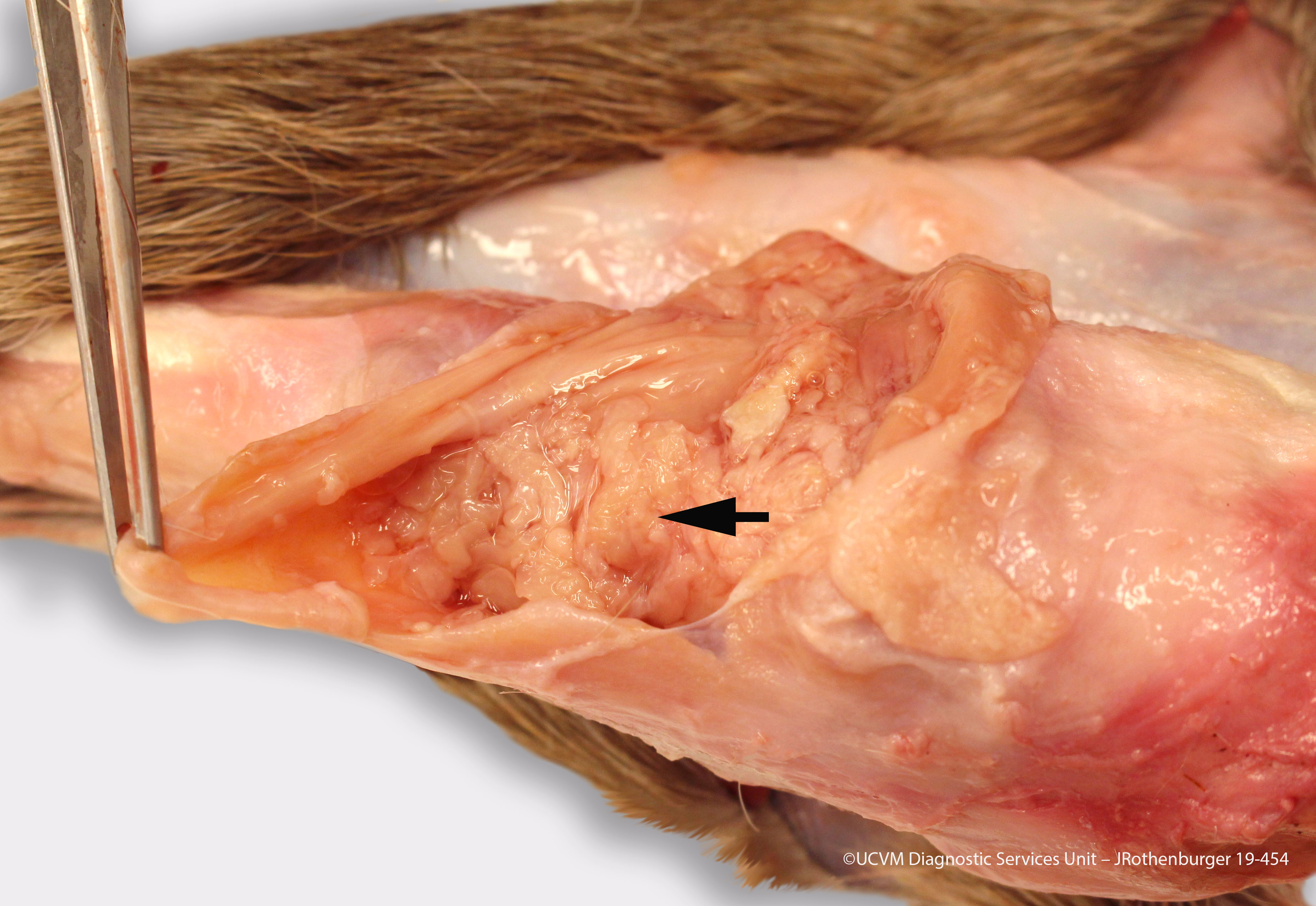
Lymphoplasmacytic synovitis of the joint capsule caused by Brucella suis biovar 4
Plain-Language Description:
When the pathologist cut into the swollen joint (center of previous front-leg image), they found it filled with watery fluid and loose clumps and strands of "fibrin" (a material that signals inflammation) caused by Brucella infection.
Pathology Description:
Swelling of carpus projecting ~3cm above the level of the carpal bones with a distended joint capsule. On cut section the joint capsule contains ~7mL of fluid with copious flocculent tan particles (fibrin).
Pathology:
Brucellosis
General Information:
In the Arctic, brucellosis is a highly contagious disease that occurs in caribou and muskoxen, and rarely in other species (e.g., moose). It is caused by the bacterium Brucella suis biovar 4 and most often affects the reproductive organs and leg joints. Infected animals may appear healthy, but often they will have swollen joints and may limp. Other signs of brucellosis are swollen, bigger-than-usual testicles, udder, or uterus. Affected animals may also have yellow-white spots or lumps (small abscesses) in their muscle tissue, kidneys, or other organs. Brucella is a zoonotic bacterium, meaning it can be transmitted between animals and people.
Pathology:
Brucellosis
General Information:
In the Arctic, brucellosis is a highly contagious disease that occurs in caribou and muskoxen, and rarely in other species (e.g., moose). It is caused by the bacterium Brucella suis biovar 4 and most often affects the reproductive organs and leg joints. Infected animals may appear healthy, but often they will have swollen joints and may limp. Other signs of brucellosis are swollen, bigger-than-usual testicles, udder, or uterus. Affected animals may also have yellow-white spots or lumps (small abscesses) in their muscle tissue, kidneys, or other organs. Brucella is a zoonotic bacterium, meaning it can be transmitted between animals and people.